
Electrical Panel Components: What’s Inside and Why It Matters

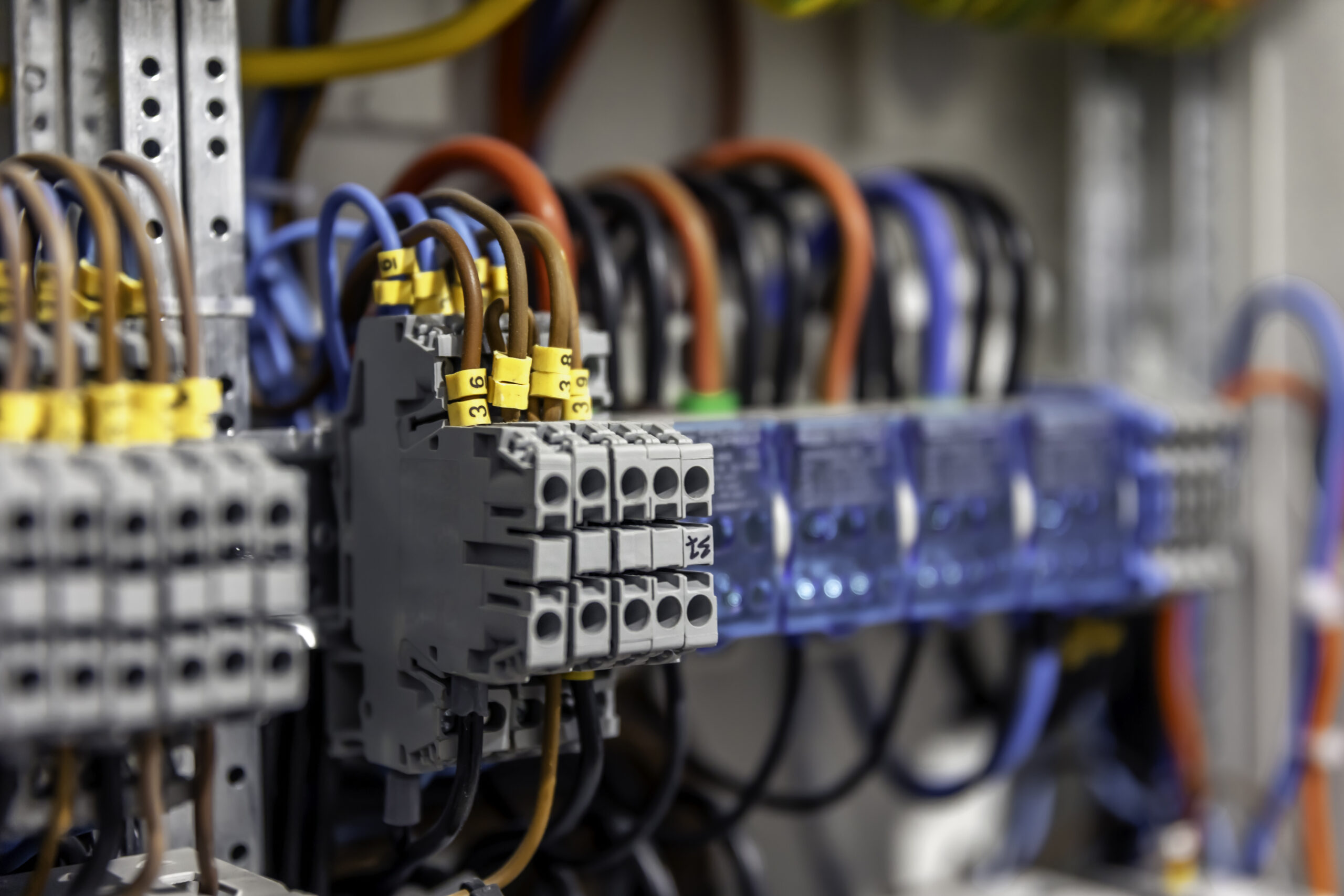
Open any electrical panel and what you see is not random. Each of the electrical panel components inside has a specific job, and the wrong choice or wrong rating anywhere in that chain can bring down an entire circuit. For contractors and facility managers in Saudi Arabia, understanding what these components do makes it easier to spot poor quality before a panel is even installed. This guide breaks down the main electrical panel components, what each one does, and why the quality of every part matters as much as the overall design.
The Main Breaker: Where Power Enters the Panel
The main breaker is usually the largest device inside the enclosure, positioned to control the total incoming power before it reaches anything else. If a fault happens anywhere downstream, this is often the last line of protection.
Because the main breaker carries the panel’s full load, its rating has to match the site’s actual power demand exactly. Undersized main breakers are a common cause of nuisance tripping in busy facilities.
Busbars: The Backbone of Power Distribution
Busbars are rigid conductors, usually copper or aluminium, that carry current from the main breaker to every circuit breaker inside the panel. Among all electrical panel components, busbars see the most continuous current flow.
Poor busbar sizing or loose connections generate heat over time, and in industrial settings running continuous loads, that heat buildup is one of the leading causes of panel failure.
Circuit Breakers and Protection Devices
Individual circuit breakers protect each branch circuit, tripping when current exceeds a safe limit. Molded case circuit breakers handle higher industrial loads, while miniature circuit breakers cover smaller distribution circuits.
Residual current devices add a layer of protection against earth leakage, catching faults that standard breakers are not designed to detect. Together, these protection devices are the electrical panel components most directly responsible for preventing fires and electrical panel equipment damage.
Contactors and Relays: Controlling the Load
Contactors switch higher-current loads, most commonly starting and stopping motors on command. Thermal overload relays paired with contactors protect motors from sustained overcurrent conditions during startup and operation.
Smaller relays handle lower-current switching, controlling lighting circuits, alarms, or signals to other devices in the system. Selecting the wrong relay for a load is a common mistake in panels assembled without proper engineering review.
If your facility needs reliable motor control, explore Al Samman’s Motor Control Center (MCC) solutions and discuss your project requirements with the engineering team.
Transformers and Terminal Blocks
Transformers step voltage up or down between circuits, supplying the correct voltage to control devices that cannot run directly off incoming power. In many industrial panels, they convert supply voltage down to 24V DC for control circuits.
Terminal blocks serve as connection points, making wiring and future modifications far more manageable. Without them, every wiring change would mean disconnecting components directly.
How to Select the Right Electrical Panel Components
Selecting the right electrical panel components starts with understanding the panel’s operating requirements. Component selection should consider the system voltage, expected current, load type, short-circuit conditions, and required protection level. Ambient temperature is also important, particularly in Saudi Arabia, where high temperatures can affect component performance and thermal capacity.
Engineers should also verify that breakers, busbars, contactors, relays, and other devices are electrically and mechanically compatible. The enclosure requirements, available space, future load expansion, and applicable standards should be considered before finalizing the configuration. Proper component selection ensures that the panel can handle its intended load reliably while maintaining safe and efficient operation.
PLCs and Automation Components
Programmable logic controllers act as the panel’s decision-making layer in automated systems, processing signals from sensors and issuing commands to relays, contactors, and motor drives.
In facilities running continuous processes, PLC-based panels reduce manual intervention and catch fault conditions faster than relay-only logic. These electrical panel components are increasingly standard in Saudi industrial and commercial projects.
How Electrical Panel Components Work Together
Electrical panel components work as an integrated system rather than as individual devices. Incoming power first passes through the main breaker, which provides primary isolation and protection. Busbars then distribute power to individual circuits, where circuit breakers provide branch-circuit protection.
For motor and equipment control, contactors and relays manage switching and protection, while transformers can supply the required control voltage. In automated systems, PLCs process input signals and send commands to control devices. When properly selected and coordinated, these components create a panel that distributes power safely, protects connected equipment, and supports reliable system operation.
If your project requires reliable coordination between multiple power sources, explore Al Samman’s Synchronization Panels and discuss your power management requirements with the engineering team.
Why Component Quality Determines Panel Reliability
A well-designed panel with substandard electrical panel components is still a weak panel. Cheap breakers drift out of calibration, low-grade busbars overheat under sustained load, and unbranded relays fail without warning.
This is why sourcing matters as much as design. A panel builder working with an authorized brand relationship has access to genuine, traceable components rather than parts of uncertain origin.
In Saudi Arabia’s climate, this becomes even more important. High ambient temperatures push every component closer to its thermal limit, and low-quality parts fail faster under that stress.
Routine maintenance extends the working life of these parts considerably. Periodic inspection of terminal connections, dust removal from enclosures, and infrared thermography on busbars catch early warning signs before electrical panel parts fail in service.
How Al Samman Sources and Assembles Electrical Panel Components
Al Samman Panel Builder operates from the Riyadh Industrial Estate as an authorized panel builder of Schneider Electric, giving direct access to genuine breakers, contactors, and control devices rather than substitute parts.
Every panel type the company manufactures, from main electrical distribution panel components to motor control centers, is assembled with industrial electrical panel components rated for the specific load and climate conditions of the project, not a generic configuration.
That approach has supported projects for Al Rajhi Bank, Hilton Group properties, King Fahad Hospital, and NEOM’s Oxagon development, where component failures were never an acceptable risk. Have a specification that needs verified, traceable components? Al Samman’s engineering team can confirm sourcing before manufacturing starts.
Electrical Panel Component Standards and Ratings
electrical control panel components must be selected according to the electrical ratings and standards applicable to the project. Key parameters include rated voltage, rated current, short-circuit withstand capability, and the protection level required for the installation. Standards such as IEC 61439 for low-voltage switchgear and controlgear assemblies and IEC 60947 for low-voltage switchgear help define important performance and safety requirements.
The enclosure’s IP rating should also match the installation environment, while component ratings must account for operating temperature and expected loads. Reviewing these requirements during the design stage helps ensure that panel components are suitable for the application and properly coordinated within the complete assembly.
Talk to Al Samman’s Electrical Panel Experts
If you need reliable electrical panels with properly specified, traceable components, contact Al Samman’s engineering team to discuss your project requirements and panel specifications.
Frequently Asked Questions
What are the most important components of electrical panel?
The main breaker, busbars, individual circuit breakers, contactors, and relays form the core of most panels, handling power distribution and protection.
Why do busbars overheat in some panels?
Undersized busbars or loose connections increase resistance at the joint, generating heat under continuous load that eventually damages nearby components.
What is the difference between a contactor and a relay?
Contactors switch higher-current loads, most often motors, while relays handle lower-current switching for lighting, alarms, and control signals.
Do all electrical panels need a PLC?
No. Simple distribution panels rely on breakers and basic protection devices, while automated industrial processes typically require a PLC-based control panel.
Why does component sourcing matter for panel reliability?
Genuine, brand-authorized components are manufactured to consistent tolerances, while unverified parts can fail unpredictably under real operating conditions.
Can Al Samman supply panels with Schneider Electric components specifically?
Yes. As an Authorized Panel Builder of Schneider Electric, Al Samman sources genuine components directly for every panel it manufactures.