
ATS Panel Full Form, Prices and Function

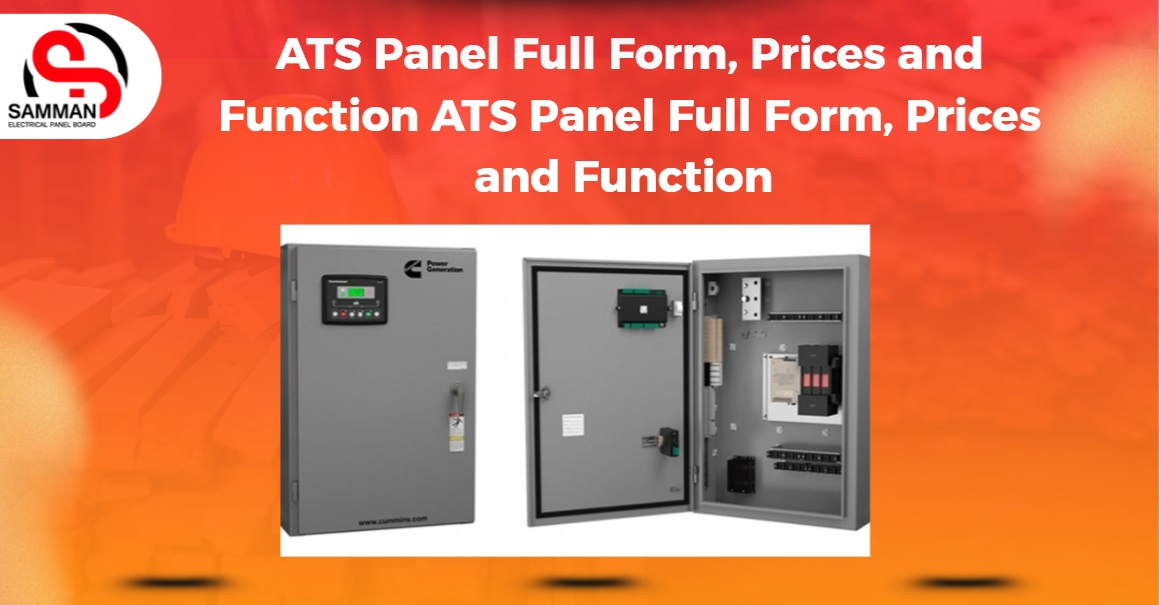
ATS panel full form is Automatic Transfer Switch, a low-voltage switchgear assembly that automatically switches electrical loads between utility power and backup generators during outages. Essential for hospitals, data centers, and industrial facilities across Saudi Arabia, ATS panels ensure power continuity within seconds without manual intervention.
This guide covers ATS sizing, type comparison, and pricing factors. For projects in Riyadh, Jeddah, or Dammam requiring emergency backup systems, understanding ATS panel full form, operation, and selection criteria prevents costly specification errors.
What is ATS Panel Full Form?
ATS panel full form is an electrical control assembly that automatically switches power supply from the main utility grid to a backup generator during outages, then returns to utility power when restored.
Quick Answer:
- A = Automatic
- T = Transfer
- S = Switch
- Function: Detects power failure → Starts generator → Transfers load → Restores to utility
- Used in: Hospitals, data centers, industrial facilities, commercial buildings
ATS Panel Full Form and Definition
ATS stands for Automatic Transfer Switch.
When utility power drops, the ATS detects the failure, starts your generator, and switches your critical loads, all automatically.
Three Core Subsystems
- The switching device
Contactors or motorized circuit breakers handle the physical connection between sources. These components switch hundreds or thousands of amperes reliably.
- The microprocessor controller
Monitors voltage and frequency on both sources continuously, ready to act within milliseconds when parameters fall outside acceptable ranges.
- The interlocking system
Prevents both sources from connecting simultaneously. This critical safety feature protects equipment, generators, and utility workers from dangerous backfeeding.
Transfer Speed
- Standard open transition: 3-10 seconds
- Closed transition: Under 100 milliseconds
- Static transfer: Under 4 milliseconds
You’ll find automatic transfer equipment rated from 100A for small commercial buildings up to 4000A for major industrial facilities.
El-Samman Group manufactures IEC 61439-certified ATS panels in Riyadh with SCADA-ready controllers for remote monitoring across Saudi healthcare, industrial, and infrastructure projects.
Function of ATS Panel
Here’s what happens inside an ATS panel from the moment utility power fails:
- Power Monitoring
The controller measures voltage, frequency, and phase balance every 20-100 milliseconds, verifying quality meets your programmed thresholds for power failure protection.
- Failure Detection
When voltage drops below limits, frequency drifts outside 47-53 Hz, or a phase disappears, the controller recognizes a fault condition within 0.1-3 seconds.
- Generator Start Signal
The ATS control circuit sends a dry contact closure or digital command to your generator control panel. Your generator begins its warm-up sequence, typically 5-15 seconds.
- Load Transfer
Once the controller confirms generator voltage and frequency are stable, it opens the utility breaker, then closes the generator connection. Transfer completes in 3-10 seconds for standard systems.
- Utility Restoration
When utility power returns, a programmable timer (typically 5-30 minutes) ensures the utility has stabilized before transferring back. This prevents damage from repeated switching.
- Backfeed Prevention
Mechanical interlocks physically prevent both sources from closing simultaneously. Electrical interlocks provide redundant protection per IEC 60947-6-1 requirements.
ATS Panel Components and Configuration
ATS panels rely on advanced switching, monitoring, and interlocking systems to guarantee reliable source transfer. Each component is designed to enhance safety and performance.
- Switching Mechanisms
- Contactor-based systems
- Three-pole or four-pole contactors rated per IEC standards. Typical electrical endurance: 100,000 to 500,000 operations.
- Best for ratings up to 1600A with lower initial cost and faster switching (50-100 milliseconds).
El-Samman Group sources ABB and Schneider contactors with factory-backed endurance ratings verified through type testing at their Riyadh facility.
- Circuit breaker-based systems
- Motorized ACBs or MCCBs serve dual purposes, switching between sources and providing overcurrent protection.
- Handle higher ratings (1600A to 4000A) with longer mechanical life. Transfer takes 200-500 milliseconds but eliminates separate feeder breakers.
- Control and Monitoring Systems
- The microprocessor controller manages transfer sequences with programmable parameters:
- Transfer voltage thresholds: 85-90% of nominal
- Re-transfer voltage thresholds: 90-95%
- Frequency windows: 47-53 Hz
- Time delays for each transfer step
- Modern controllers include Modbus RTU/TCP, Ethernet, and BACnet protocols for building management integration. You track transfer events, log power quality data, and receive alarms remotely.
- Sensing and Interlocking
- Voltage transformers or direct sensing circuits measure line voltages up to 690V AC with precision.
- Phase sequence detectors prevent connection to reversed utility feeds that could damage three-phase motor loads.
- Mechanical interlocks physically prevent simultaneous closing of utility and generator contactors. Even if the controller fails, the mechanical interlock provides final protection.
- Enclosure Protection
- IP41/IP43: Indoor climate-controlled electrical rooms
- IP54/IP65: Harsh Saudi industrial environments including coastal humidity, desert dust, or outdoor installations (20-30% cost premium)
- Installation requires ATS panel wiring diagrams showing utility and generator connections per Saudi Electricity Company standards.
ATS Panel Types Comparison
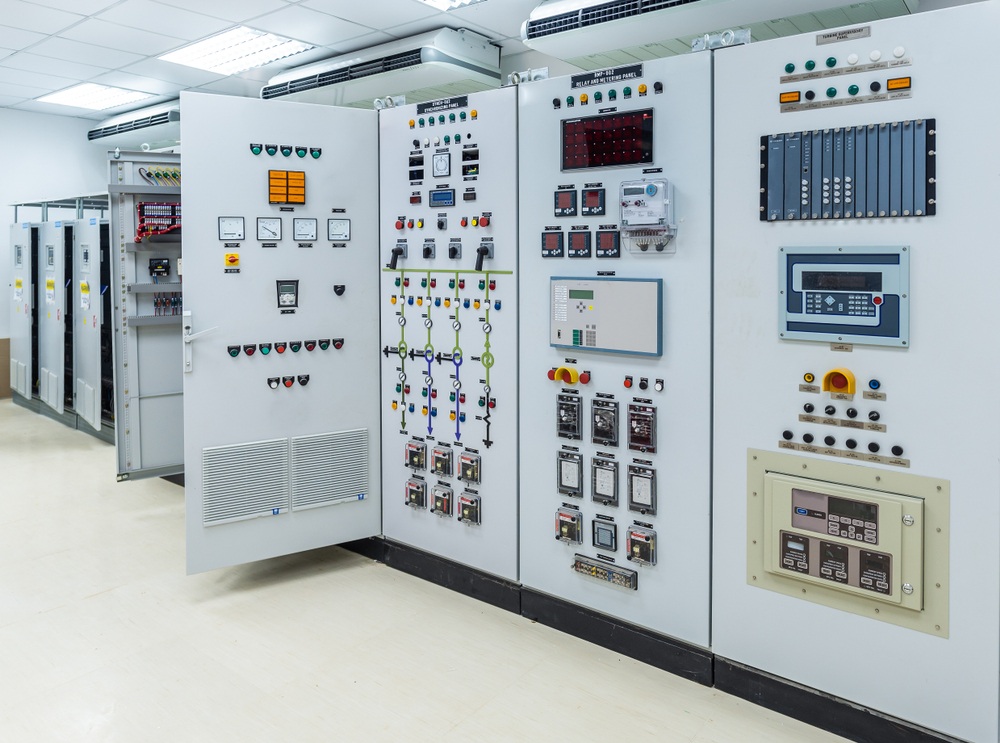
ATS panel full form
Feature | Open Transition | Closed Transition | Delayed Transition | Static Transfer |
Transfer time | 3-10 seconds | <100 milliseconds | 0.5-2 seconds | <4 milliseconds |
Load interruption | Yes (momentary) | No | Yes (neutral pause) | No |
| Cost premium | Baseline | +40-60% | +20-35% | +100-200% |
| Typical applications | General facilities, HVAC | Data centers, parallel generators | Motor loads, elevators | Medical imaging, IT infrastructure |
| Rating range | 100-4000A | 100-3200A | 100-4000A | 10-800A |
- Open Transition ATS
Utility breaker opens, brief pause (under one second), then generator breaker closes.
Best for: HVAC systems, general lighting, receptacle loads, any equipment tolerating brief interruption.
Simplest configuration means fewer components to maintain and lower initial cost.
- Closed Transition ATS
Both sources connect briefly (typically 100 milliseconds or less) during transfer. No interruption to your loads.
Best for: Data centers with UPS systems, facilities requiring zero-interruption transfer, systems with parallel-capable generators.
Requires synchronization controls verifying voltage, frequency, and phase angle match before closing both sources.
El Samman Group supplied closed transition ATS panels for Riyadh Metro electrical rooms where critical signaling and control systems require zero-interruption protection.
- Delayed Transition ATS
Adds a neutral position where both sources disconnect before the new source connects. The delay (0.5-2 seconds) lets motor loads coast down before transferring.
Best for: Elevator systems, large air handling units, preventing generator damage from reverse-power conditions.
- Static Transfer Switches
Solid-state devices with no moving parts switch in under 4 milliseconds.
Best for: Critical IT infrastructure, medical imaging equipment (MRI, CT scanners), precision manufacturing processes.
Cost runs 2-3 times higher than open transition equivalents. Limited in current rating (10-800A) and generate more heat during operation.
ATS Panel Price Factors
- Current Rating
- Entry-level (100-400A): Small commercial installations, retail stores, clinics, small offices
- Mid-range (630-1600A): Most industrial applications, hospitals, hotels, manufacturing plants
- Large assemblies (2000-4000A): High-rise towers, major industrial plants
Cost scales with rating: larger contactors, thicker copper busbars, heavier cables, bigger enclosures. A 3200A panel costs 60-80% more than 1600A.
- Switching Technology
- Contactor-based: Lowest initial cost, fastest switching. Excellent value for applications below 1600A.
- Breaker-based: Cost 25-40% more but provide integrated overcurrent protection and longer mechanical life.
- Controller Grade
- Basic voltage monitoring: Handles standard transfer sequences adequately.
- Advanced controllers: Add power metering, event logging, Modbus/Ethernet communication, SCADA integration. Cost impact: +15-30% to base panel cost.
El Samman’s engineering team reports that controller specifications drive more cost variance than ampere rating in the 400-1600A range, the specification matters more than size alone.
- Transfer Type Selection
- Open transition: Baseline cost
- Closed transition: +40-60% premium for synchronization controls
- Static transfer: 2-3 times open transition cost
- Environmental Protection
- Standard IP41/IP43: Climate-controlled electrical rooms (baseline)
- IP54/IP65: Harsh environments, dust storms, coastal humidity, outdoor installations
Expect 20-30% higher enclosure costs. Cheaper to specify correctly initially than replace failed components later.
- Documentation and Testing
Factory acceptance testing, IEC type test certificates, and SASO compliance documentation add project costs but provide assurance before transfer switch installation begins.
Comprehensive FAT procedures include:
- Injection testing (simulating failure without cutting power)
- Temperature rise verification (confirming no overheating at rated current)
- Operational sequence validation (proving every transfer step works)
Cost Estimation Requirements
Manufacturers need documentation:
- Single-line diagram showing source configuration, generator specifications
- Detailed load schedule with operating currents, power factors, motor starting characteristics
- Transfer time requirements based on load sensitivity
- Environmental conditions at installation location
El Samman Group provides detailed cost estimates based on approved single-line diagrams and specifications. Our local manufacturing facility enables competitive pricing while maintaining IEC quality standards.
Why is ATS used?
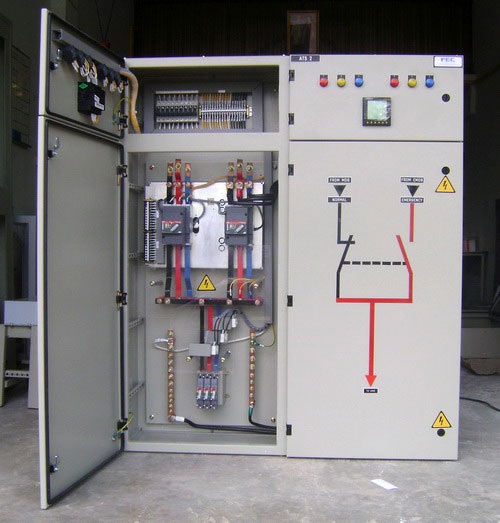
ATS panel full form
ATS panels are specified where power interruption would cause operational disruption, safety risks, or financial loss. In Saudi Arabia’s growing infrastructure sector, automatic transfer switches are essential for:
- Healthcare facilities: Operating rooms, ICUs, and diagnostic equipment require uninterrupted power for patient safety
- Data centers: Server systems and cooling infrastructure in Riyadh and Jeddah depend on millisecond-level transfer times
- Industrial production: Manufacturing lines with continuous processes cannot tolerate manual switching delays
- Commercial towers: Elevators, fire safety systems, and emergency lighting must remain operational during outages
By eliminating manual intervention, ATS panels reduce downtime from minutes to seconds and remove dependence on operator availability during after-hours failures. The automated sequence also prevents human error in source switching procedures.
If downtime is not acceptable, ATS integration becomes a core panel requirement.
Planning emergency power for a critical facility?
Early coordination between electrical, mechanical, and controls teams ensures proper ATS sizing and generator integration.
How to Size an ATS Panel
- Rating Calculation
ATS rating ≥ Total load current × 1.25 safety factor
That 1.25 multiplier accounts for continuous operation at rated load plus headroom for momentary overloads. NEC and IEC codes require it.
- Motor Load Calculations
Motors draw 5-7 times running current during starting. Your ATS contacts must handle this inrush.
Example: A 200 HP motor might draw 250A running, but starting current hits 1,500A.
If you have multiple large motors that could start simultaneously after power restoration, calculate the worst-case scenario.
- Generator Capacity Matching
- Verify your generator can actually supply the full ATS-protected load including motor starting inrush.
- Undersized generators cause voltage dip during transfer. Voltage drops below acceptable limits, sensitive loads trip offline.
- Work with your generator supplier and ATS manufacturer simultaneously on transfer sequence timing and load characteristics.
- Transfer Time Considerations:
- UPS-backed computer systems: Tolerate 5-10 second open transition (batteries bridge the gap)
- Motor loads: May require delayed transition to prevent backfeed during coast-down
- Medical imaging equipment: Often mandate closed transition or static switching for zero interruption
ATS Panel Factory KSA Location
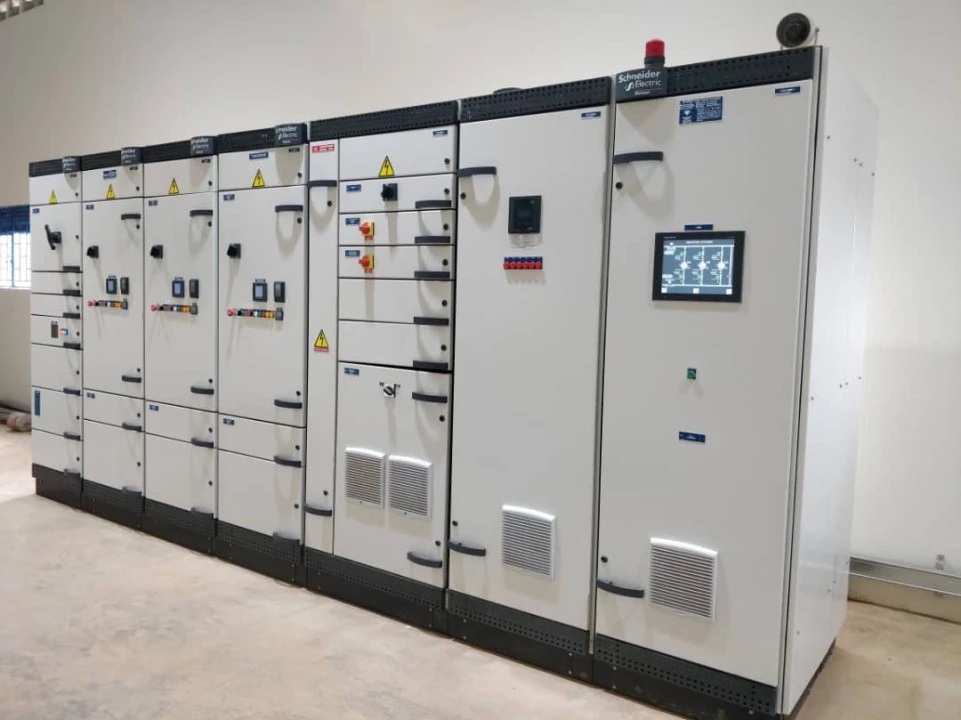
ATS panel full form
Local manufacturing of ATS panels in Saudi Arabia provides project advantages:
- Delivery and Compliance
- Saudi-manufactured panels: 4-8 weeks from approved drawings
- Imported assemblies: 12-20 weeks minimum (production slots, international shipping, customs clearance)
IEC 61439 type-tested designs with SASO certification streamline authority approval processes. Local manufacturers maintain test reports, technical files, and conformity declarations in Arabic and English, formatted for Saudi regulatory submissions.
- Factory Acceptance Testing
Witness FAT procedures before shipment lets your engineering team verify transfer sequences, interlocking operation, and controller programming match specifications exactly.
El-Samman’s Riyadh facility includes IEC 61439 type-testing equipment (injection test chambers, temperature rise verification, high-current testing) with same-day FAT scheduling. Your engineer witnesses testing without international travel, sign off and the panel ships.
Injection testing and operational verification at the factory identify issues before site installation. Fixing problems in a workshop costs far less than troubleshooting on construction sites.
- Technical Support
Local engineering resources provide commissioning assistance when panels arrive on site. They help with startup, transfer testing, and controller programming adjustments.
If problems arise during operation, service technicians reach sites across Saudi Arabia within hours for critical repairs with proper spare parts.
Manufacturer Evaluation Criteria
When selecting suppliers for Saudi projects, verify:
- IEC type test certification: Confirm IEC 61439-1 and 61439-2 compliance through independent test lab verification. Ask to review type test reports covering temperature rise, short-circuit withstand, and dielectric strength.
- Component quality standards: Manufacturers utilizing ABB, Schneider, or equivalent quality switching components ensure long-term reliability and global warranty support.
- In-house testing facilities: Factories with injection test equipment, temperature rise chambers, and high-current testing capability demonstrate quality commitment.
- Project reference validation: Request reference lists with contact information for similar-scope projects. Call those references and ask about delivery performance, quality issues, and post-installation support.
Specifying an ATS system for your project?
El-Samman’s engineering team can review your load schedule and recommend the optimal transfer configuration for Saudi compliance requirements.
Frequently Asked Questions
What is ATS panel full form in electrical engineering?
ATS panel full form is Automatic Transfer Switch. It is a low-voltage switchgear assembly that automatically transfers electrical loads between utility power and standby generators during power failures, ensuring continuity for critical facilities without manual intervention.
What is the difference between ATS and AMF panels?
ATS (Automatic Transfer Switch) panels handle source switching only, transferring loads between utility and generator. AMF (Automatic Mains Failure) panels integrate both transfer switching and generator control functions including automatic start/stop, monitoring, and protection.
What are the types of ATS panels?
Main types include open transition ATS (momentary power interruption during 3-10 second switching), closed transition ATS (no interruption with brief parallel operation requiring generator synchronization), delayed transition ATS (neutral pause for motor load applications), and static transfer switches (solid-state switching under 4 milliseconds for sensitive IT loads).
How do you size an ATS panel correctly?
ATS rating must equal or exceed total load current multiplied by 1.25 safety factor. Calculate: ATS rating ≥ Total load current × 1.25. Account for motor starting inrush current (typically 5-7 times running current) and ensure generator capacity matches ATS-protected load.
How often should ATS panels be tested?
Follow an ATS panel maintenance schedule: monthly no-load testing simulates transfer sequences to verify controller operation. Quarterly load testing under actual operating conditions verifies performance. Annual preventive maintenance includes contact inspection, control calibration, and insulation resistance testing per IEC 60947-6-1 requirements.
What is the typical lifespan of an ATS panel?
Well-maintained ATS panels operate reliably for 15-25 years in commercial and industrial applications. Contactors typically require replacement after 50,000-100,000 operations depending on load current. Circuit breaker-based systems often exceed 25-year service life with proper maintenance.