
Electrical Panel Safety: What Every Facility in Saudi Arabia Needs to Know

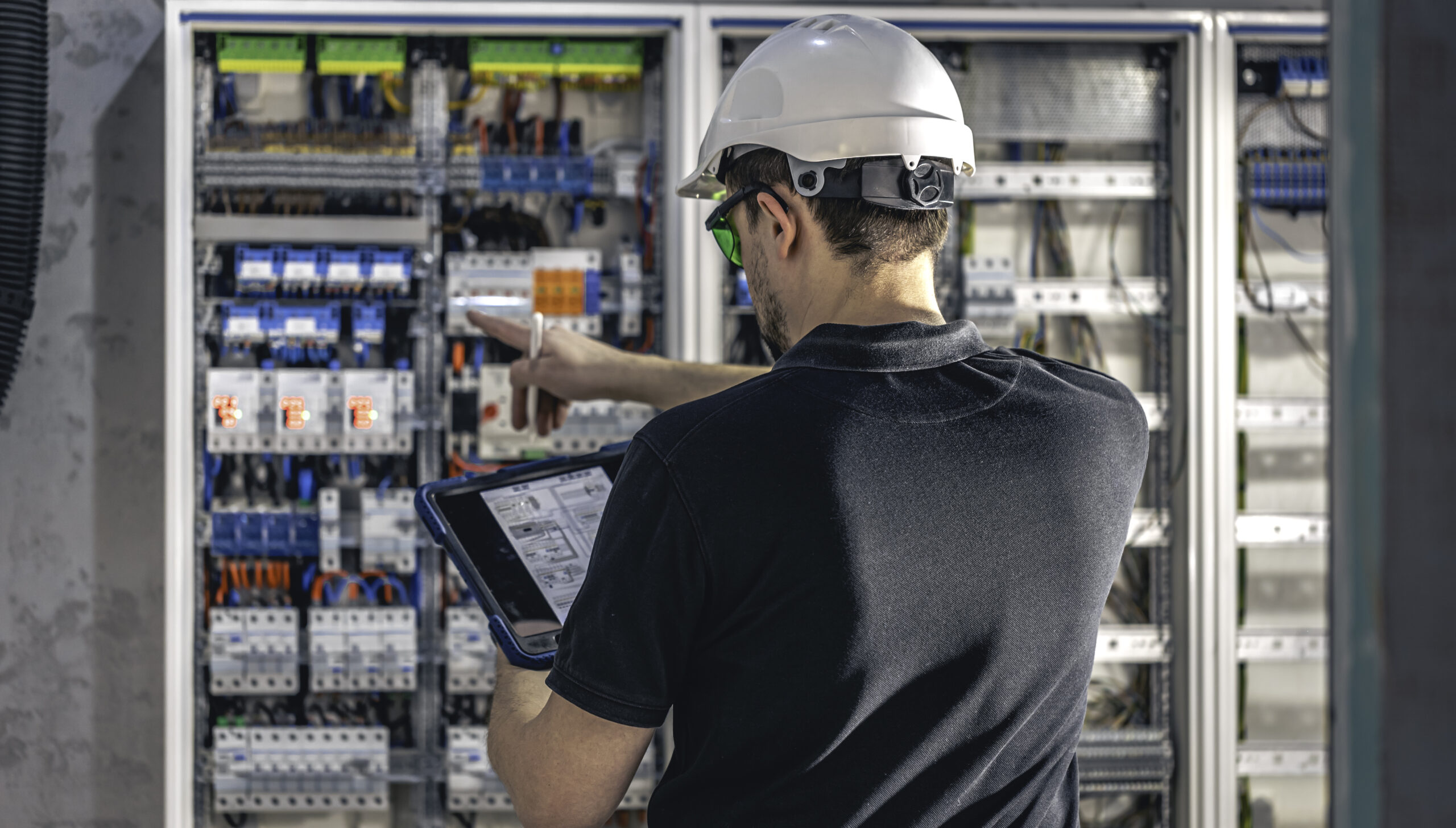
Most electrical accidents inside a facility do not happen because someone ignored the rules. They happen because a panel was treated as routine when it was not.
Electrical panel safety covers the design choices, electrical panel safety procedures, and maintenance habits that keep a panel from becoming the source of an incident. This guide walks through the main hazards involved and what actually reduces the risk around them.
A panel that has run without incident for years can still be one loose connection away from a serious fault. Complacency, more than any single mistake, is what allows small issues to grow into real hazards.
Why Electrical Panel Safety Starts at the Design Stage
The safest panel is one where hazards were engineered out before installation, not managed around afterward. Proper clearances, insulated barriers, and correctly rated protective devices reduce risk long before a technician ever opens the enclosure door.
Electrical panel safety is often treated as a matter of training and procedure alone. In practice, a poorly designed panel makes every safe work practice harder to follow correctly.
Enclosure design matters here too. A panel rated for the wrong environment, undersized for its load, or missing proper segregation between circuits creates risk that no amount of PPE fully offsets.
Electrical Panel Safety Standards and Regulations in Saudi Arabia
electrical panel safety Saudi Arabia should be based on the standards and safety requirements that apply to the equipment, installation, and work environment. For Saudi projects, electrical design and installation requirements may involve the Saudi Building Code, applicable IEC standards, and project-specific specifications.
These requirements address areas such as equipment ratings, protection, clearances, grounding, enclosure characteristics, and safe installation practices. Industrial projects may also impose additional requirements through client or consultant specifications.
Applying the relevant requirements during the design stage helps reduce safety risks before installation begins. It also gives contractors and facility owners a clearer basis for inspection, commissioning, and ongoing maintenance.
Arc Flash: The Hazard Most Panels Are Built to Contain
An arc flash is a sudden release of energy from a fault inside a panel, capable of causing severe burns, blindness, and blunt trauma from the resulting pressure wave. It can happen during routine tasks like tightening a connection, not only during major faults.
Reducing this risk starts with engineering controls. Proper grounding, current-limiting devices, and arc-resistant switchgear lower the potential severity of an arc flash before it ever reaches a worker.
Labeling matters as much as design. Every panel should carry visible warnings showing incident energy levels and the PPE required to work near it, based on a documented arc flash risk assessment.
Lockout, Tagout, and the Myth of “Powered Off”
A common misunderstanding puts workers at risk more than almost anything else: assuming a panel is safe simply because a switch has been turned off. Lockout and tagout procedures exist because visual inspection alone cannot confirm a system is de-energized.
The lockout process itself is treated as energized work until every step is complete. Opening disconnects, releasing stored energy, applying locks, and verifying zero voltage with a tested meter all happen before a panel is considered safe to touch.
electrical panel safety KSA programs that skip any of these steps are not actually protecting anyone, they are creating a false sense of security that increases risk rather than reducing it.
For facilities where emergency circuits must remain powered during a main supply failure, Al Samman’s Emergency Main Distribution Board (EMDB) is engineered to support reliable power distribution for critical loads. Contact the team to discuss your emergency power requirements.
Electrical Panel Grounding and Bonding Safety
Proper grounding and bonding are fundamental parts of electrical panel safety. They provide a controlled path for fault current and help protective devices operate when an electrical fault occurs.
Panel enclosures, doors, removable metal sections, and other conductive parts should be properly bonded where required by the design. Protective earth connections should also be continuous and sized according to the applicable electrical panel safety requirements.
Poor grounding can increase touch-voltage risks and may prevent protective devices from responding as intended during a fault. Regular inspection of grounding connections and continuity therefore forms an important part of a facility’s electrical safety program.
PPE and Safe Work Boundaries
Personal protective equipment is the last line of defense, not the first. Arc-rated clothing, insulated gloves, and face protection matter only after engineering controls and safe procedures have already reduced the underlying hazard.
Flash protection boundaries define how close a worker can approach an energized panel without full PPE, based on the incident energy calculated for that specific equipment. These boundaries vary by panel, not by general assumption.
Good electrical panel safety practice treats PPE as something inspected and replaced regularly, not equipment that sits unused until an inspection reminds someone it exists. Skipping that upkeep quietly undermines every other safety measure in place.
Electrical Panel Emergency Procedures and Incident Response
Every facility should have clear procedures for responding to electrical panel incidents. Workers need to know how to raise an alarm, isolate affected equipment when it is safe to do so, and report the incident without exposing themselves to additional electrical hazards.
An emergency response plan should account for events such as electrical fires, arc flash incidents, equipment overheating, unexpected trips, and visible damage inside a panel. Only qualified personnel should perform electrical isolation or troubleshooting, following the site’s established safety procedures.
After an incident, the affected panel should not simply be returned to service because it appears functional. The equipment should be inspected, the cause of the incident identified, and any required repairs or testing completed before re-energization.
Maintenance Practices That Protect Long-Term Safety
Safety risk builds up slowly, often through conditions that look minor on their own. Dust accumulation, loose terminations, and corrosion inside an enclosure all raise the chance of an arc flash or overheating event over time.
In Saudi Arabia’s climate, this risk compounds faster than in milder regions. Fine desert dust infiltrates enclosures not properly sealed, and high ambient temperatures accelerate the degradation of insulation and connections.
Routine infrared thermography, periodic torque checks on terminations, and scheduled cleaning catch these issues before they become failures. Electrical panel safety depends as much on this ongoing discipline as it does on the original design.
For reliable distribution across individual circuits, Al Samman’s Distribution Board (DB) solutions are engineered with appropriate protection and load requirements in mind. Contact the team to discuss your project’s distribution needs.
Electrical Panel Safety Inspection and Maintenance Checklist
A structured inspection program helps identify electrical panel hazards before they develop into failures. The inspection frequency should reflect the panel’s operating environment, criticality, and applicable project or electrical panel safety maintenance.
A typical inspection may include:
- Checking for dust, moisture, corrosion, or physical damage
- Inspecting enclosure doors, seals, and ventilation
- Checking visible cable and terminal conditions
- Verifying protective earth connections
- Looking for signs of overheating or discoloration
- Performing infrared thermography where appropriate
- Checking specified termination torque during scheduled maintenance
- Reviewing repeated breaker trips or unusual operating conditions
- Confirming warning labels remain visible and legible
- Recording findings and corrective actions
Documented inspections make it easier to identify recurring problems and prioritize corrective maintenance before a safety issue becomes an unplanned shutdown or electrical incident.
How Al Samman Builds Electrical Panel Safety Into Every Assembly
Al Samman Panel Builder operates from Riyadh Industrial Estate as an Authorized Panel Builder of Schneider Electric, designing every panel with clearances, protective coordination, and enclosure ratings suited to the actual site conditions.
Panels are engineered with the climate in mind from the start, addressing dust ingress and thermal derating rather than leaving those factors to be managed after installation. This is electrical panel safety applied at the point where it matters most, before the panel ever reaches site.
That approach has supported projects for Al Rajhi Bank, Hilton Group properties, King Fahad Hospital, and NEOM’s Oxagon development, where safety compliance was never negotiable. Need a panel engineered with safety built in from the design stage? Al Samman’s team can review your site conditions before manufacturing begins.
Need Safer Electrical Panels for Your Facility?
Protect your facility with electrical panels engineered around proper clearances, protection requirements, enclosure ratings, and Saudi operating conditions. Contact Al Samman to discuss your project.
Frequently Asked Questions
What is the biggest hazard associated with electrical panels?
Arc flash is generally considered the most severe hazard, capable of causing serious burns and injury from a sudden release of fault energy.
Why isn’t turning off a switch enough to make a panel safe?
Visual inspection cannot confirm de-energization. Lockout, tagout, and voltage verification are required to establish a genuinely safe work condition.
Does PPE alone protect workers from panel hazards?
No. PPE is the last line of defense and works only alongside engineering controls, proper labeling, and safe work procedures.
How does Saudi Arabia’s climate affect electrical panel safety?
High ambient temperatures and dust exposure accelerate insulation wear and connection degradation, making regular maintenance more critical than in cooler climates.
What should an arc flash warning label include?
It should show the incident energy level and the PPE category required to work near that specific panel, based on a documented risk assessment.
How does Al Samman address safety at the design stage?
Al Samman engineers clearances, protective coordination, and enclosure ratings around each project’s actual load and climate conditions from the start.